
Visuals of Tradition: The Attire of Bagurumba Performers
A deep dive into the colorful aesthetics of the performance. This article details the traditional clothing worn by the Bodo women, specifically the dokhna (draped dress), jwmgra (scarf), and aronai (muffler), and how these garments enhance the visual beauty of the dance.
1/18/20262 min read
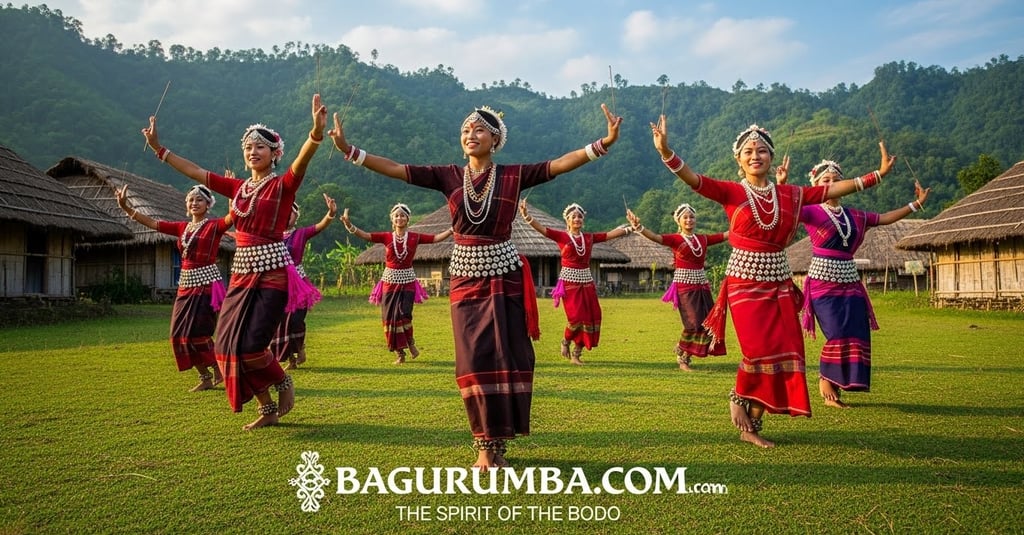
🎨 Visuals of Tradition: The Attire of Bagurumba Performers
When the Bagurumba dance begins, the audience is not just captivated by the movement, but by a striking explosion of color. The visual identity of this indigenous folk dance is defined by the exquisite hand-woven garments worn by the Bodo women of Assam and Northeast India.
Every piece of clothing is not merely decorative; it is deeply symbolic and essential to creating the "Butterfly Dance" effect. Here is a deep dive into the traditional attire that brings this performance to life.
👗 The Dokhna: The Canvas of Culture
At the heart of the ensemble is the Dokhna, the traditional draped dress that serves as the foundation of Bodo women's attire.
Distinct Style: Unlike the saree worn in other parts of India, the Dokhna is a single wrap-around garment that covers the torso and extends down to the ankles. It is wrapped once around the body and tied at the chest.
Agor (Patterns): These garments are hand-woven with intricate motifs known as Agor, which often feature geometric shapes, flowers, and designs inspired by nature, reflecting the tribe's deep bond with the environment.
Color Palette: For Bagurumba performances, the Dokhna is often bright yellow or vibrant green, symbolizing the colors of spring, nature, and the harvest.
🧣 The Jwmgra: Wings of the Butterfly
If the Dokhna is the body, the Jwmgra represents the wings. This traditional scarf is the specific element that gives Bagurumba its nickname, the "Butterfly Dance".
The Transformation: The Jwmgra is worn over the shoulders. During the performance, the dancers pinch the ends of the scarf and extend their arms outward and upward.
Visual Impact: As they sway, the Jwmgra flutters in the air. This specific movement creates the silhouette of a butterfly opening and closing its wings, transforming the dancer into a creature of flight.
🧶 The Aronai: A Symbol of Pride
Completing the attire is the Aronai, a small traditional muffler or scarf worn around the neck.
Cultural Importance: The Aronai is perhaps the most significant symbol of Bodo culture. It is not just a fashion accessory but a mark of respect and identity.
Intricate Weaving: Like the Dokhna, the Aronai features elaborate, miniature embroidery that showcases the skill of Bodo weavers. In the context of the dance, it adds an extra layer of texture and color to the upper body movements.
✨ Enhancing the Visual Beauty
The combination of these three garments—Dokhna, Jwmgra, and Aronai—creates a cohesive visual spectacle.
When the dancers move in a line or circle, the uniformity of the bright colors and the synchronized fluttering of the Jwmgra create a hypnotic wave-like effect. The attire effectively turns the human form into a representation of nature, allowing the dancers to tell the story of the forest, the birds, and the butterflies through fabric and motion.