
The Butterfly Dance: A Guide to the Bodo Tribe's Bagurumba
An introduction to the most famous folk dance of the indigenous Bodo tribe in Assam and Northeast India. This post explores why it is affectionately known as the "Butterfly Dance," highlighting how the dancers' outstretched arms resemble birds and butterflies in flight.
1/18/20262 min read
🦋 The Butterfly Dance: A Guide to the Bodo Tribe's Bagurumba
In the verdant landscapes of Assam and Northeast India, the rhythm of nature comes alive through dance. Among the many cultural treasures of the region, the Bagurumba stands out as a symbol of grace, color, and indigenous heritage.
This traditional folk dance belongs to the Bodo tribe, the largest indigenous community in Assam, and is widely celebrated for its unique choreography that mimics the gentle fluttering of nature.
🌿 Why Is It Called the "Butterfly Dance"?
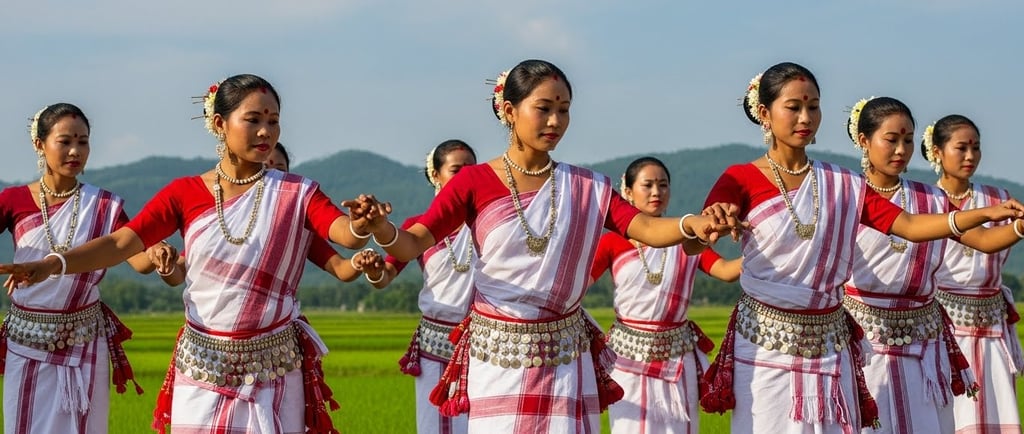
The most distinct feature of Bagurumba is its visual similarity to nature in motion. It is affectionately known as the "Butterfly Dance" because of the specific arm movements used by the performers.
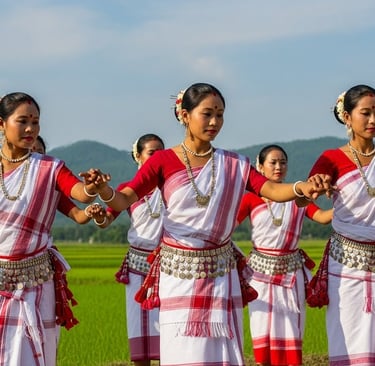
Flight in Motion: As the dancers move, they slowly stretch their arms outward and upward. This motion, combined with their swaying bodies, resembles the wings of butterflies and birds in flight.
A Visual Spectacle: The colorful traditional attire creates a mesmerizing effect as the women move in formation, looking like a swarm of butterflies fluttering across a field.
💃 The Performers & Attire
The dance is performed primarily by Bodo women, who dress in vibrant, hand-woven traditional attire that is essential to the dance's identity.
Dokhna: The primary draped dress worn by the dancers.
Jwmgra: A traditional scarf that adds layers and movement to the costume.
Aronai: A distinctive muffler, often used as a symbol of Bodo identity.
🎵 The Rhythm of the Earth
Bagurumba is not just visual; it is an auditory experience driven by traditional, handmade instruments. The music creates a rhythm that mimics the heartbeat of the forest. The dance is accompanied by:
🥁 Kham: A large traditional drum that provides the deep, rhythmic beat.
🎋 Sifung: A long bamboo flute with five holes (instead of the usual six), producing a deep, melodious tune.
🎻 Serja: A bowed instrument similar to a violin, adding a rustic string melody to the performance.
🌸 Symbolism & Significance
More than just entertainment, Bagurumba is a celebration of the Bodo way of life.
Nature & Harmony: The dance represents peace and a deep connection with the environment.
Mimicking Life: Beyond butterflies, the choreography often depicts the movements of plants swaying in the breeze, flowing rivers, and animals, reinforcing the tribe's bond with the natural world.