
Dancing with Nature: The Symbolism of Bagurumba
Explores the deeper meaning behind the movement. This post explains how Bagurumba serves as a representation of peace and harmony with the environment, depicting the movements of plants, animals, and flowing rivers.
1/18/20261 min read
🍃 Dancing with Nature: The Symbolism of Bagurumba
In many cultures, dance is a form of storytelling. For the Bodo tribe of Assam and Northeast India, the Bagurumba is a story told not with words, but with movement—a story about the deep, inseparable bond between humans and the natural world.
While it is famous for its visual spectacle, the "Butterfly Dance" is much more than entertainment. It is a spiritual reflection of the environment that surrounds the Bodo people.
☮️ A Representation of Peace and Harmony
At its core, Bagurumba is a celebration of peace and harmony. The dance is soft, fluid, and graceful, lacking aggressive or sharp movements. This gentleness mirrors the Bodo philosophy of living in balance with nature rather than trying to conquer it.
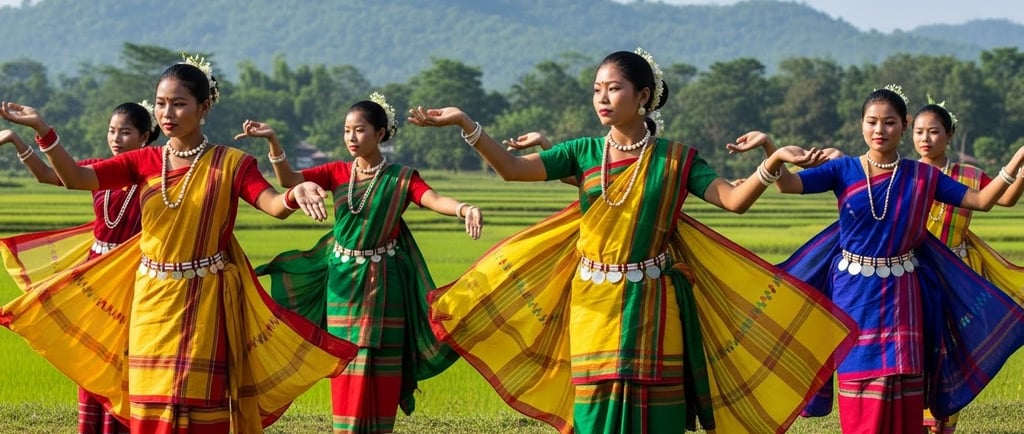
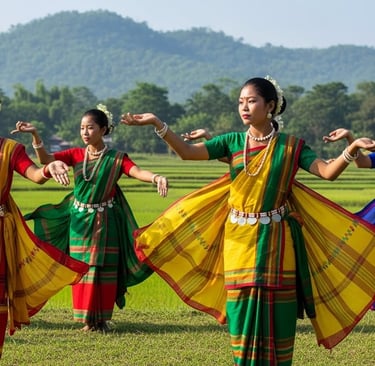
When the women perform in their vibrant dokhna and aronai, they are not just dancing; they are embodying the tranquility of the forest and the rhythm of life itself.
🌊 Mimicking the Flow of Life
The choreography of Bagurumba is directly inspired by the observation of nature. The movements are designed to mimic the living world found in the verdant landscapes of Assam:
Flowing Rivers: The swaying motion of the dancers' bodies often represents the gentle currents of a river winding through the plains.
Swaying Plants: The rhythmic side-to-side steps depict tall grasses and trees swaying in the breeze.
Animal Life: Beyond butterflies, the dance captures the essence of birds and other animals, celebrating the biodiversity of the region.
🦋 The Butterfly Metaphor
The most enduring symbol of the dance is, of course, the butterfly. By extending their arms and using their jwmgra (scarves) as wings, the dancers symbolize lightness and transformation.
This imagery reinforces the idea that nature is not static—it is always moving, fluttering, and alive. Through Bagurumba, the Bodo tribe ensures that this connection to the earth is never forgotten, passing down the lessons of nature from one generation to the next.